
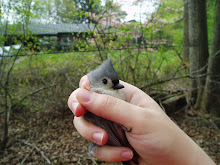
See the link to the left? (It's below the saiga antelope.) Click on it to play the best vocabulary-building game ever. Every time you get a word correct, they donate 20 grains of rice. Might not be the most effective way of donating food, but it's really addictive. So far my best level is 49. (Max is 55, I'm still trying to get there.)
In case you're interested, a cup of rice contains approximately 7200 grains. (I know that that's a fact because I found it on the Internet!) So get clicking, you just need to get 360 words right to get there. That isn't very many, and it goes by fast!
Friday, April 18, 2008


Smoking Guns and Drunken Logic

Today is April 18!
You know what that means, right?
Today's the day Expelled opens nationwide!
The Times has a brief and scathing review.
From the review, it sounds like Ben Stein listened to Billy Flynn: "Give 'em the old razzle dazzle, razzle-dazzle 'em... Long as you keep 'em way of balance, how can they spot you've got no talents?"
You're just a bagel, Ben. And your arguments are like a piece of Swiss cheese -- nutty and full of holes.
PS: I couldn't bear to post a picture of Ben Stein's smug face on my blog, so I put up a picture of Mr. D. instead. He looks displeased about the movie too.
Thursday, April 17, 2008
Quick Rant
I am so tired of being told that my wedding dress is the most important dress I'll ever wear. Yeah, it's important. But let's say I was in a field in which the Nobel Prize was awarded (come on Nobel committee, there's more to biology than medicine!), and I somehow manage to win one, and I go to Sweden and wear a formal evening gown and look fabulous while accepting my prize. Isn't that gown ALSO important?
I actually really like wedding planning stuff, most of it has been pretty fun so far, but I am SO TIRED of the hyperbole! Bands do it, stationers do it, photographers do it, magazines do it. Yes, it is an important and significant milestone in my life. BUT it is not a reason to abuse the English language within an inch of its life. For example, one band told me that they would end my party on the highest possible note. Yeah. OUCH.
I just wish they would stop the terrible writing. It actually makes me less likely to like you when you can't use the word "literally" correctly to save your life. Literally is the opposite of figuratively, not a synonym... thus no one is going to be "literally dancing on air" or whatever. If they were, that would be some pretty sweet advanced technology! (Human-sized air hockey sounds like a GREAT idea for a wedding reception!)
 Godzilla does not like high notes either.
Ok, I'm done now.
/rant
I actually really like wedding planning stuff, most of it has been pretty fun so far, but I am SO TIRED of the hyperbole! Bands do it, stationers do it, photographers do it, magazines do it. Yes, it is an important and significant milestone in my life. BUT it is not a reason to abuse the English language within an inch of its life. For example, one band told me that they would end my party on the highest possible note. Yeah. OUCH.
I just wish they would stop the terrible writing. It actually makes me less likely to like you when you can't use the word "literally" correctly to save your life. Literally is the opposite of figuratively, not a synonym... thus no one is going to be "literally dancing on air" or whatever. If they were, that would be some pretty sweet advanced technology! (Human-sized air hockey sounds like a GREAT idea for a wedding reception!)
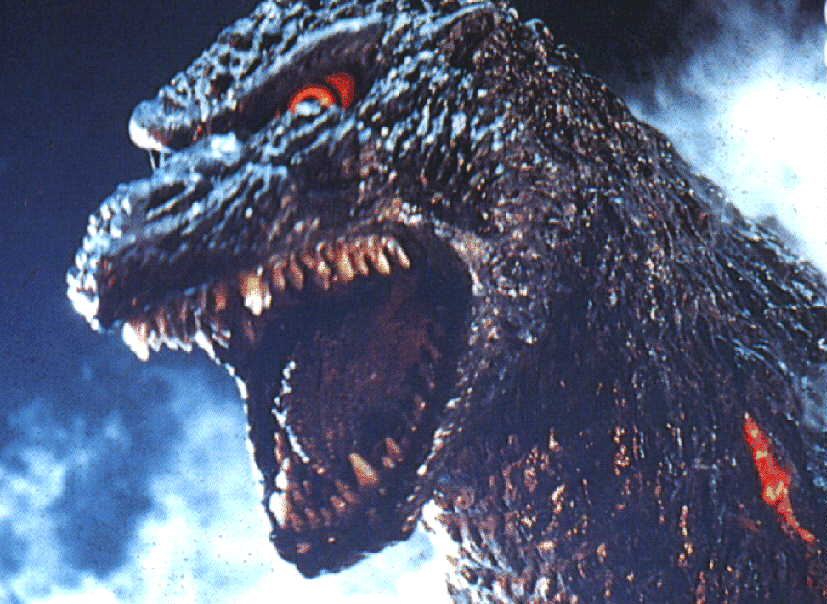 Godzilla does not like high notes either.
 Ok, I'm done now.
/rant
10 Reasons to Rent "Life in the Undergrowth"
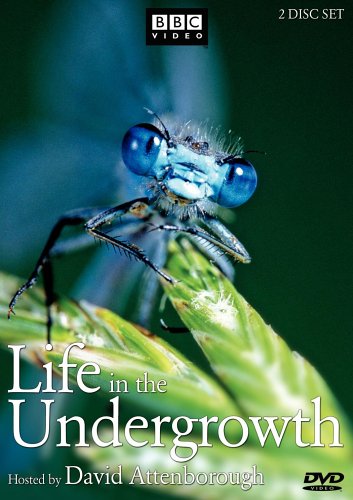
Rent it! D. and I just watched the last episode a few weeks ago. It is amazing. It was far too short, in my opinion, for all the diversity of creepy-crawlies out there, but it was nonetheless an astonishing nature documentary.
There are actually eleven good reason to rent it. Check out these ten video clips that the producers considered the highlights of the series.
(Don't worry, they're short, but if you're really pressed for time, the slugs mating, the feather-legged bug, and the titan beetle are my favorites. Oh and the bees. Check out the bees!)
The eleventh reason? This man:
 Sir David, with friend.
 Sir David Attenborough -- do you need any more reasons to watch anything? Go rent it now! I know for sure that Netflix has it. Enjoy!
Wednesday, April 16, 2008
Avast!
OK, let's get something straight here. I am fond of 18th century-style pirating. Not 21st century style pirating.

BUT! I am incredibly excited about eco-pirates, or "pirates of compassion" as they style themselves.
Green Pirates Claim Victory
Victory via coconut cream. That has got to be the best pirate I've ever seen!

Jack does not approve of whaling, unless whales are full of rum!
BUT! I am incredibly excited about eco-pirates, or "pirates of compassion" as they style themselves.
Green Pirates Claim Victory
It's really sad that countries I otherwise have no real problems with (Canada, Japan) insist on maintaining these out-of-date marine mammal hunts. Whaling is so nineteenth century! But it seems like the pirates did a fantastic job; the Japanese whaling ships were only able to take about half the number of whales they had set out to brutally slaughter, and none of those were fin or humpback whales. It's still a few hundred whales too many for my tastes, but still -- a good thing for cetacean-kind!
 Jumping for joy!
 Jumping for joy!
Victory via coconut cream. That has got to be the best pirate I've ever seen!
Tuesday, April 15, 2008
Godwin's Law: The Movie
A new movie is coming out this Friday called Expelled. It claims to present evidence that intelligent design (aka creationism) is being pushed out of academia despite being well-supported and a good alternative to evolution. Oh, and it also links Darwin to Hitler.
Right.
It is propaganda and lies, pure and simple, which is why I'm not actually linking to the movie's web page. (Learn more here.) I actually had this quandary a few weeks ago, and here comes Pharyngula with a solution to my problem! I couldn't bear to link to the actual movie page and boost their Google ranking, but I couldn't just let Ben Stein and his pseudoscience slide under the radar entirely. NCSE to the rescue!
Right.
It is propaganda and lies, pure and simple, which is why I'm not actually linking to the movie's web page. (Learn more here.) I actually had this quandary a few weeks ago, and here comes Pharyngula with a solution to my problem! I couldn't bear to link to the actual movie page and boost their Google ranking, but I couldn't just let Ben Stein and his pseudoscience slide under the radar entirely. NCSE to the rescue!
Monday, April 14, 2008
Move, Whales, Get Out the Way!
Humans to whales: "Can't you move it any faster?"
Even the Whales Have Their Predators: Ships
Not much to say here except that I'm rethinking what I said about not hating people. Even the whalewatch boats don't want to slow down!
Short post tonight because blogging isn't my job, being a student is my job!
Even the Whales Have Their Predators: Ships
Not much to say here except that I'm rethinking what I said about not hating people. Even the whalewatch boats don't want to slow down!
Short post tonight because blogging isn't my job, being a student is my job!
Sunday, April 13, 2008
Better Know an Insect: Giant Water Bug
Like, OMG, I have been totally vertebrate-ing out here. Hares, tortoises... humans!
Let's get back to bugs, eh?
Today's subject happens to be the topic for my insect behavior class tomorrow: the giant water bugs.
 Depending on your monitor, this might be life-sized!
Things you should know about the giant water bug:
Giant water bugs in the genus Abedus are one of the few insects that demonstrate paternal parental care. (Say that five times fast!) After repeated matings (to assure paternity), the female lays her eggs on the back of the male who fertilized them.

He takes care of them for a fortnight or so, even though they may weigh up to four times more than he does. He makes sure they get enough oxygen by "brood pumping", which is to say that he rocks forward and backward to move them through the water. Eventually, towards the end of their development, they encumber his breathing apparatus to the point that he needs to park himself on a plant and stay close to the surface until they hatch.
Furthermore, mama water bugs and unencumbered males will eat any first instar (just after hatching) nymphs that they can get their grasping appendages on, but dads brooding eggs will not eat nymphs. It's not all bad-parent good-parent though; if times are tough, the male will remove the eggs from his back and eat them before moving on to find a better habitat. Mm, embryo-licious!
I hope you've enjoyed these installments of "Better Know an Insect (or Other Arthropod)." I think I'll keep doing them, because they're really fun! I'll probably cut down to once a week or so from now on, but I will keep the series going. Thanks for reading!
PS: You'd probably love to know what my sources are, wouldn't you? Click this link to a Google search for the genus and the author, and prepare to immerse yourself (ha!) in water bug literature. The papers I read today are:
Let's get back to bugs, eh?
Today's subject happens to be the topic for my insect behavior class tomorrow: the giant water bugs.
 Depending on your monitor, this might be life-sized!
Things you should know about the giant water bug:
- There are several genera that are referred to as "giant water bugs."
- Really not kidding about that "giant" part, some can be almost five inches long! (Oh, and they fly!)
- They have one of the most painful bites out of all the insects. (Rated on a different scale from hymenopteran stings, however.)
- They're true bugs (order Hemiptera) and as such have cool sucking mouthparts. They're predators and inject digestive enzymes into their prey to liquefy them, and then suck out the contents like soup.
- They really earn the #1 DAD mug every year.
Giant water bugs in the genus Abedus are one of the few insects that demonstrate paternal parental care. (Say that five times fast!) After repeated matings (to assure paternity), the female lays her eggs on the back of the male who fertilized them.
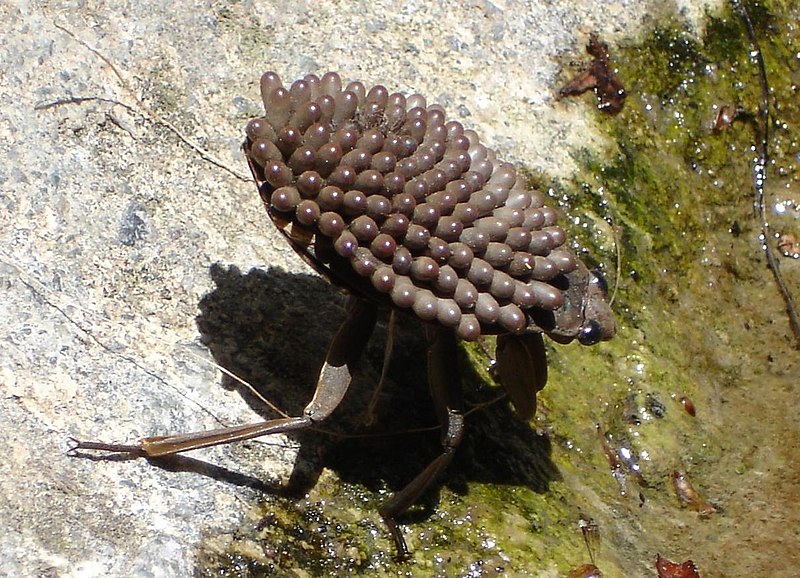
He takes care of them for a fortnight or so, even though they may weigh up to four times more than he does. He makes sure they get enough oxygen by "brood pumping", which is to say that he rocks forward and backward to move them through the water. Eventually, towards the end of their development, they encumber his breathing apparatus to the point that he needs to park himself on a plant and stay close to the surface until they hatch.
Furthermore, mama water bugs and unencumbered males will eat any first instar (just after hatching) nymphs that they can get their grasping appendages on, but dads brooding eggs will not eat nymphs. It's not all bad-parent good-parent though; if times are tough, the male will remove the eggs from his back and eat them before moving on to find a better habitat. Mm, embryo-licious!
I hope you've enjoyed these installments of "Better Know an Insect (or Other Arthropod)." I think I'll keep doing them, because they're really fun! I'll probably cut down to once a week or so from now on, but I will keep the series going. Thanks for reading!
PS: You'd probably love to know what my sources are, wouldn't you? Click this link to a Google search for the genus and the author, and prepare to immerse yourself (ha!) in water bug literature. The papers I read today are:
- Smith, R. L., 1976. Male brooding behavior of the water bug Abedus herberti. Annals of the Entomological Society of America 69:740-747.
- Smith, R. L., 1979. Paternity assurance and altered roles in the mating behavior of a giant water bug, Abedus herberti. Animal Behaviour 27:716-725.
- Smith, R. L., 1979. Repeated copulation and sperm precedence: paternity assurance for a male brooding water bug. Science 205:1027-1031.
Saturday, April 12, 2008
The Tortoise and the Hare
This morning I volunteered at Run for the Woods, the EcoGSA's spring 5K to benefit Helyar Woods. I'm not a runner (I think I've mentioned my knees), so I was staffed at a tricky part of the course, guiding runners and making sure they stayed on track.
Standing about in the woods on a beautiful morning left me plenty of time to think. I was thinking about races in general, and Aesop's story about a tortoise and a hare, and I wondered: what's the difference between a turtle and a tortoise or a rabbit and a hare?
 I'm pretty sure I can outrun this guy.
First, tortoises. Tortoises are a kind of turtle; specifically, the kind that lives on land, eats plants, and can't swim. (Although they can float. Maybe.) All of the tortoises are in the family Testudinidae, in the order Testudines. As far as I can tell from Wikipedia and from Vertebrate Life (one of my favorite textbooks!), they seem to be a "good group;" that is, they are all descended from one slow ancestor. I can't seem to find anything called a tortoise that is not in Testudinidae. Which is actually not what I was expecting to find; I had been under the impression that tortoise was a catch-all term for turtles that live on land. Interesting! So, tortoises are a kind of turtle.
 Definitely not this guy.
Hares, on the other hand, are not a kind of rabbit. Rabbits and hares, along with pikas, are all in the order Lagomorpha. Lagomorphs, in turn, are not rodents; they're the sister order to rodents, and are thus closely related, but there are significant differences between the two. Rabbits and hares are both in the family Leporidae, but the "true hares," again, as far as I can tell via Wikipedia, are all in the genus Lepus. (Which is a very large genus.) There are other lagomorphs also called hares, but they are in other genera. So... what does this mean for rabbits and hares? I'm pretty sure it would be wrong to say that all hares are rabbits, or that all rabbits are hares. Both of them are lagomorphs, and some of the common names seem to be arbitrary. (Jackrabbits are actually in Lepus, for example, making them hares despite their common name.)
This is why I like scientific names. All of the lagomorphs in Lepus are more closely related to each other than to any lagomorphs in Sylvilagus, whether you call them hares, jackrabbits, bunnies, cottontails, or Peter.
Aesop should have called it "The Testudine and the Lepus," just to clear things up a ... hare.
 I hate puns. I am not a punny rabbit... damn.
PS: Three interesting things to know about hares:
Standing about in the woods on a beautiful morning left me plenty of time to think. I was thinking about races in general, and Aesop's story about a tortoise and a hare, and I wondered: what's the difference between a turtle and a tortoise or a rabbit and a hare?
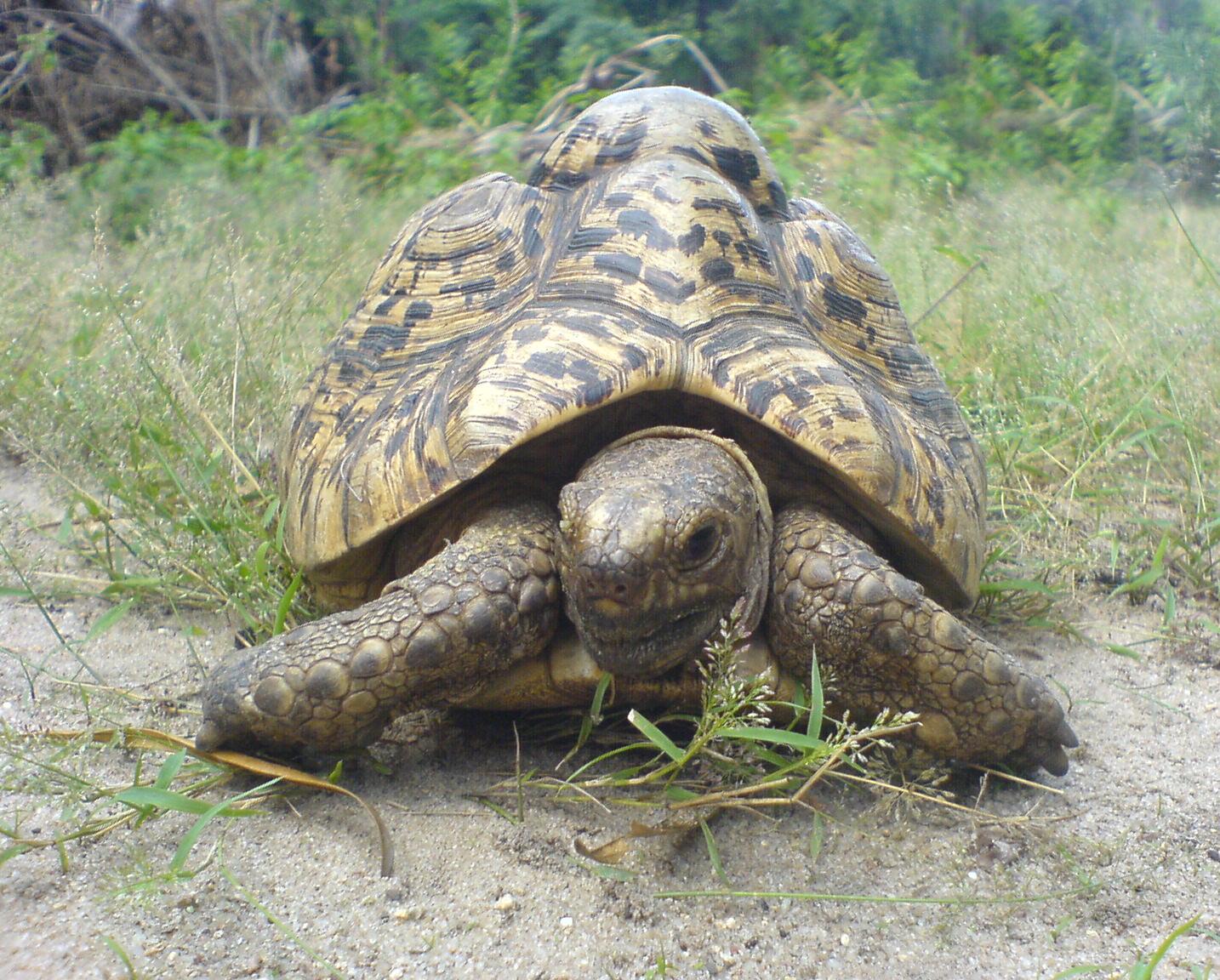 I'm pretty sure I can outrun this guy.
First, tortoises. Tortoises are a kind of turtle; specifically, the kind that lives on land, eats plants, and can't swim. (Although they can float. Maybe.) All of the tortoises are in the family Testudinidae, in the order Testudines. As far as I can tell from Wikipedia and from Vertebrate Life (one of my favorite textbooks!), they seem to be a "good group;" that is, they are all descended from one slow ancestor. I can't seem to find anything called a tortoise that is not in Testudinidae. Which is actually not what I was expecting to find; I had been under the impression that tortoise was a catch-all term for turtles that live on land. Interesting! So, tortoises are a kind of turtle.
 Definitely not this guy.
Hares, on the other hand, are not a kind of rabbit. Rabbits and hares, along with pikas, are all in the order Lagomorpha. Lagomorphs, in turn, are not rodents; they're the sister order to rodents, and are thus closely related, but there are significant differences between the two. Rabbits and hares are both in the family Leporidae, but the "true hares," again, as far as I can tell via Wikipedia, are all in the genus Lepus. (Which is a very large genus.) There are other lagomorphs also called hares, but they are in other genera. So... what does this mean for rabbits and hares? I'm pretty sure it would be wrong to say that all hares are rabbits, or that all rabbits are hares. Both of them are lagomorphs, and some of the common names seem to be arbitrary. (Jackrabbits are actually in Lepus, for example, making them hares despite their common name.)
This is why I like scientific names. All of the lagomorphs in Lepus are more closely related to each other than to any lagomorphs in Sylvilagus, whether you call them hares, jackrabbits, bunnies, cottontails, or Peter.
Aesop should have called it "The Testudine and the Lepus," just to clear things up a ... hare.
 I hate puns. I am not a punny rabbit... damn.
 PS: Three interesting things to know about hares:
- Those big ears aren't just good for hearing; they help the hare radiate body heat and cool off.
- Hares give birth above ground, rather than in nests like other lagomorphs. To compensate for this, their babies are precocial, meaning that they have fur, their eyes are open, and they can run soon after birth. Most other lagomorphs are born in burrows and are altricial, that is, blind, naked, and helpless.
- Hares can hit top speeds of 45 miles per hour!
Friday, April 11, 2008
Feeding the World
Right. I said last month that I am not a vegangelical, and I stand by that.
But it needs to be said.
Stop eating meat.
Despite the fact that I am an animal lover, I am not saying this to spare the cute 'n' cuddlies. The simple fact is that we are running out of grain, and eating animals is an inefficient use of grain, and although I sometimes don't like people, it doesn't mean I want a massive food crisis to hit around the globe. It takes 700 calories of grain to produce 100 calories of cow. I don't know about you, but 14% efficiency, to me, is WAY too low.
Some recent reading material:
Grains Gone Wild -- Paul Krugman's editorial from a few days ago.
Farmer's Spurn Conservation Program -- Science/Business Times this week.
First one is straightforward, just read it. Second article... well, do we want to eat or do we want to worry about the birds, as the baker says? Why can't we do both? Cattlemen have the answer:
Further, one of the demands on the food system is that countries that traditionally haven't eaten much meat (looking at you, China) are starting to adopt American-styles diets, full of beefy goodness. So, as though Americans weren't enough of a strain by themselves, people around the world now want to eat the way we do. And there just isn't enough land to support that lifestyle.
We're not going to get any more land. We have one planet, and that's it.
There's really only one solution. Stop eating meat. It's the easiest thing you can do today to save the world.
But it needs to be said.
Stop eating meat.
Despite the fact that I am an animal lover, I am not saying this to spare the cute 'n' cuddlies. The simple fact is that we are running out of grain, and eating animals is an inefficient use of grain, and although I sometimes don't like people, it doesn't mean I want a massive food crisis to hit around the globe. It takes 700 calories of grain to produce 100 calories of cow. I don't know about you, but 14% efficiency, to me, is WAY too low.
Some recent reading material:
Grains Gone Wild -- Paul Krugman's editorial from a few days ago.
Farmer's Spurn Conservation Program -- Science/Business Times this week.
First one is straightforward, just read it. Second article... well, do we want to eat or do we want to worry about the birds, as the baker says? Why can't we do both? Cattlemen have the answer:
“This program is taking money out of your pocket twice a day,” said Jay Truitt, vice president for government affairs for the National Cattlemen’s Beef Association. “Do you think it’s right for you to pay so there’s more quail in Kansas?"Of course the cattlemen want more land out of the conservation program, they need it to feed their meat-producing machinery. What if I want to pay for the land in Kansas? It doesn't matter to me if the price of beef goes up, but it does matter to me if there is less land available for our native birds. (And who made a bunch of bakers and cattlemen experts on what would or would not harm the environment? Probably the same group that decided airlines could monitor themselves.)
The cattlemen and bakers argue that farmers should immediately be allowed to take as much as nine million acres out of the Conservation Reserve without paying a penalty, something they say would not harm the environment.
Further, one of the demands on the food system is that countries that traditionally haven't eaten much meat (looking at you, China) are starting to adopt American-styles diets, full of beefy goodness. So, as though Americans weren't enough of a strain by themselves, people around the world now want to eat the way we do. And there just isn't enough land to support that lifestyle.
We're not going to get any more land. We have one planet, and that's it.
There's really only one solution. Stop eating meat. It's the easiest thing you can do today to save the world.
Subscribe to:
Posts (Atom)
